
Grant Projects
Grant Projects
Grant Projects
An overview of our projects supported by national and European Funding
An overview of our projects supported by national and European Funding

Completed Grant Projects with Support from the Sächsische Aufbaubank (SAB) & European Fund for Regional Development (EFRE)
Completed Grant Projects with Support from the Sächsische Aufbaubank (SAB) & European Fund for Regional Development (EFRE)
Completed Grant Projects with Support from the Sächsische Aufbaubank (SAB) & European Fund for Regional Development (EFRE)
SmartInfusions
SmartInfusions
SmartInfusions
Digital end-to-end infrastructure in smart medical consumables
Digital end-to-end infrastructure in smart medical consumables
Digital end-to-end infrastructure in smart medical consumables



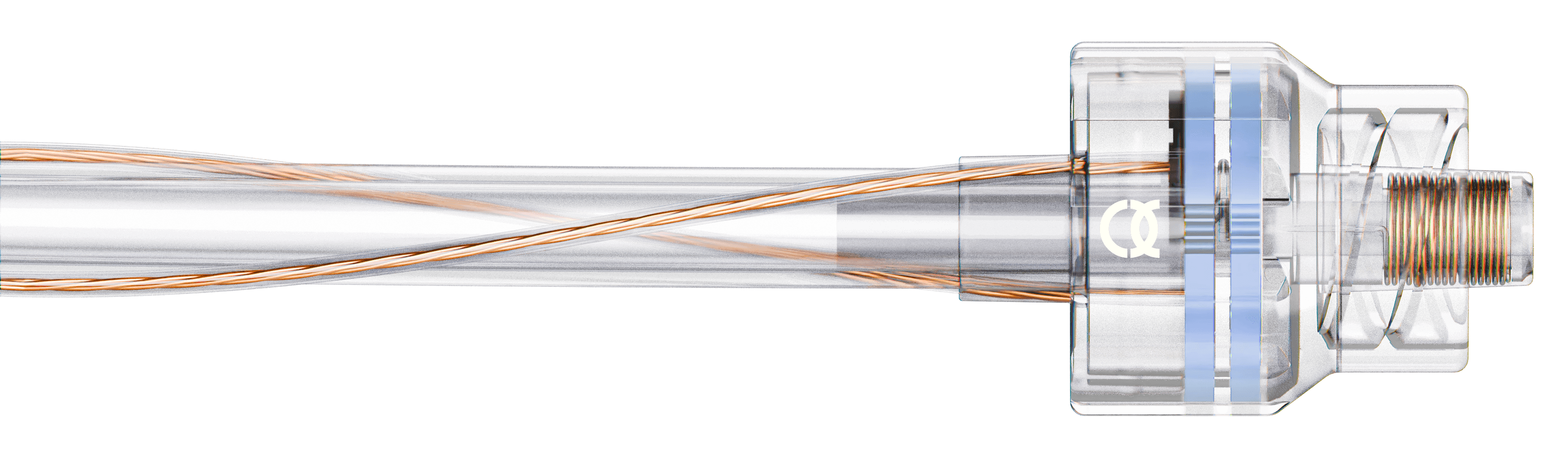
In this project, Connected Consumables (ConnCons GmbH) and its partners researched the foundations for fully digitized infusion therapies – from chemotherapy to dialysis – by embedding data and connectivity directly into medical consumables such as tubing and connectors.
In this project, Connected Consumables (ConnCons GmbH) and its partners researched the foundations for fully digitized infusion therapies – from chemotherapy to dialysis – by embedding data and connectivity directly into medical consumables such as tubing and connectors.
In this project, Connected Consumables (ConnCons GmbH) and its partners researched the foundations for fully digitized infusion therapies – from chemotherapy to dialysis – by embedding data and connectivity directly into medical consumables such as tubing and connectors.
Goal
Goal
Goal
The objective of the project was to explore the technological and regulatory foundations for seamless digital connectivity in medical fluid systems. The core vision: medical consumables such as tubing, connectors, medication containers, and pump interfaces should serve not only to guide fluids, but also to transmit information and ultimately to enable higher degree of automation in therapy processes.
To this end, the partners investigated communication technologies for smart consumables, concepts for multi-inlet pump systems, and a digital platform capable of connecting hospital information systems, logistics, pharmacy, and billing workflows. Work on an intelligent infusion port represented a further area of focus.
At the same time, the project established the regulatory and quality management foundations required for the approval of automated infusion therapies, including potential future application in home-care settings.
The objective of the project was to explore the technological and regulatory foundations for seamless digital connectivity in medical fluid systems. The core vision: medical consumables such as tubing, connectors, medication containers, and pump interfaces should serve not only to guide fluids, but also to transmit information and ultimately to enable higher degree of automation in therapy processes.
To this end, the partners investigated communication technologies for smart consumables, concepts for multi-inlet pump systems, and a digital platform capable of connecting hospital information systems, logistics, pharmacy, and billing workflows. Work on an intelligent infusion port represented a further area of focus.
At the same time, the project established the regulatory and quality management foundations required for the approval of automated infusion therapies, including potential future application in home-care settings.
The objective of the project was to explore the technological and regulatory foundations for seamless digital connectivity in medical fluid systems. The core vision: medical consumables such as tubing, connectors, medication containers, and pump interfaces should serve not only to guide fluids, but also to transmit information and ultimately to enable higher degree of automation in therapy processes.
To this end, the partners investigated communication technologies for smart consumables, concepts for multi-inlet pump systems, and a digital platform capable of connecting hospital information systems, logistics, pharmacy, and billing workflows. Work on an intelligent infusion port represented a further area of focus.
At the same time, the project established the regulatory and quality management foundations required for the approval of automated infusion therapies, including potential future application in home-care settings.
Results
Results
Results
The project successfully validated the core concepts of data over medical tubing and end-to-end connectivity. Key achievements include:
Functional transmission path from pump through tubing to bag
Cross-component ID transmission across consumables demonstrated in system-level testing
System demonstrator with software connectivity and GUI (Graphical User Interface) illustrating the overall system vision
Regulatory approval concept, risk strategy, and quality management documentation for an MVP (Minimum Viable Product) system
With these results, the project has delivered the technical and regulatory foundation it set out to establish – bringing a new generation of digitally integrated, automated infusion therapy meaningfully within reach for both clinical and home-care settings.
The project successfully validated the core concepts of data over medical tubing and end-to-end connectivity. Key achievements include:
Functional transmission path from pump through tubing to bag
Cross-component ID transmission across consumables demonstrated in system-level testing
System demonstrator with software connectivity and GUI (Graphical User Interface) illustrating the overall system vision
Regulatory approval concept, risk strategy, and quality management documentation for an MVP (Minimum Viable Product) system
With these results, the project has delivered the technical and regulatory foundation it set out to establish – bringing a new generation of digitally integrated, automated infusion therapy meaningfully within reach for both clinical and home-care settings.
The project successfully validated the core concepts of data over medical tubing and end-to-end connectivity. Key achievements include:
Functional transmission path from pump through tubing to bag
Cross-component ID transmission across consumables demonstrated in system-level testing
System demonstrator with software connectivity and GUI (Graphical User Interface) illustrating the overall system vision
Regulatory approval concept, risk strategy, and quality management documentation for an MVP (Minimum Viable Product) system
With these results, the project has delivered the technical and regulatory foundation it set out to establish – bringing a new generation of digitally integrated, automated infusion therapy meaningfully within reach for both clinical and home-care settings.
Project Partners
Project Partners
Project Partners
To achieve the project goals, SITEC Industrietechnologie GmbH, Murrplastik Medizintechnik GmbH and Medizinische Klinik 1 of the University Hospital Dresden worked together with Connected Consumables (ConnCons GmbH). in progress.
To achieve the project goals, SITEC Industrietechnologie GmbH, Murrplastik Medizintechnik GmbH and Medizinische Klinik 1 of the University Hospital Dresden worked together with Connected Consumables (ConnCons GmbH). in progress.
To achieve the project goals, SITEC Industrietechnologie GmbH, Murrplastik Medizintechnik GmbH and Medizinische Klinik 1 of the University Hospital Dresden worked together with Connected Consumables (ConnCons GmbH). in progress.
Project Timeframe: 01.11.2023 - 31.03.2026
Project Timeframe: 01.11.2023 - 31.03.2026

Services

Copyright © Connected Consumables
Services
Copyright © Connected Consumables
Services
Copyright © Connected Consumables